It is very hard to take a good shot of these extremely small flowers together especially with a phone, but here was a quick attempt:

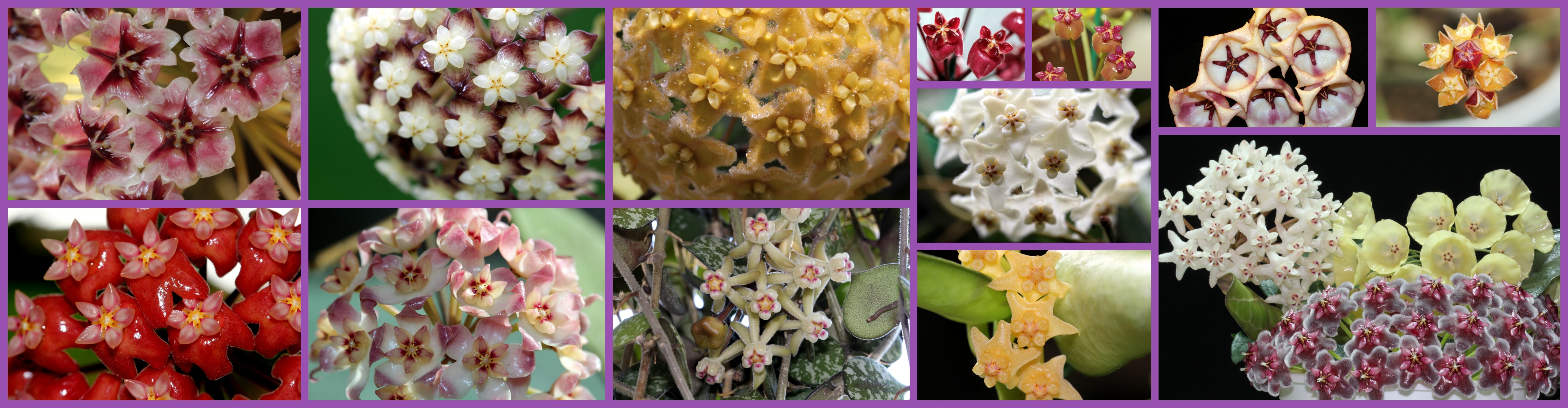
It is very hard to take a good shot of these extremely small flowers together especially with a phone, but here was a quick attempt:
No real reason to pair these up other than they are both flowering at the moment.

This is a good comparison photo as it shows the size differences in two different Acanthostemma Section Hoyas.

I almost always have a lot of Hoyas flowering this time of the year in the tents so you will get a lot of comparison photos.

The title pretty much sums up what you see here!

Finally after spraying this plant with sulfur, it began to grow in earnest once again. The plant now is growing in coconut husk mixed with large perlite and is almost 3 feet high. This is one of those Hoyas that will not bloom as a small plant, and it smells powerfully of caramel.

I have not been able to flower this one for 3-4 years so we will celebrate it for a couple of days. It took me five years to flower it the first time, and after pulled that off, the plant went downhill and I had to restart it. I had the darndest time trying to get it to take off and thrive for me again, and I believe that this was one of the plants that I had that was badly effected by flat mites. Below the flower just beginning to open:

At the time of this writing (February 2023), I can only go by the identification of the plant I received from the Indonesian vendor. Truthfully both my Hoya evelinae and Hoya apoda are so much alike other than leaf size and number of buds on a peduncle, I am wondering whether they both should be called Hoya sp. aff. evelinae. As the plant ages, it will be interesting to see if I can get several flowers on the same peduncle, that would help demonstrate to me that I indeed have Hoya evelinae. Here is a link to Nathalie Simonsson and Michele Rodda’s published paper on the species: https://www.biodiversitylibrary.org/page/56622851#page/119/mode/1up
Whether I have Hoya evelinae, or Hoya sp. aff. evelinae, it is a fantastic Hoya that flowers almost continuously and is very easy to cultivate. It gets a very high recommendation from me to add to any houseplant collection!


Hoya evelinae was named after Evelina Eriksson (1932-2009) who supported the author (Nathalie Simonsson) work in PNG in the early years.

Here are my two plants together so a comparison can be made.
