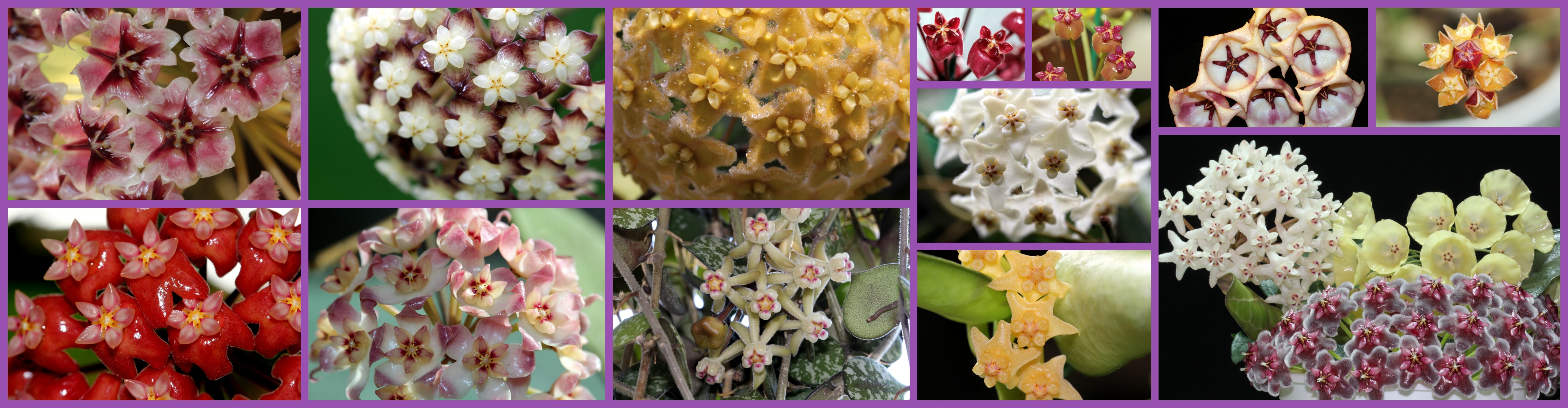

Hoya acuminata was originally described as Pterostelma acuminata by Robert Wight in 1834 based on Nathaniel Wallich specimen Asclep. n. 129. (no date, 1834 or earlier). [Thanks to Mary Carroll for all botanical information]. The plant is endemic to Bangladesh, Bhutan, China, India (Khasia Mts. in Meghalaya, Nagaland), Myanmar, and Vietnam.
Hoya acuminata was originally described as Pterostelma acuminata by Robert Wight in 1834 based on Nathaniel Wallich specimen Asclep. n. 129. (no date, 1834 or earlier). [Thanks to Mary Carroll for all botanical information]. The plant is endemic to Bangladesh, Bhutan, China, India (Khasia Mts. inHoya acuminata is part of the Hoya albiflora complex (Section Pterostelma). Its flowering season in the wild is reported to be from May through August. It is found between 600 and 1600m in elevation growing on tree trunks and branches in subtropical to tropical conditions in montane forests. Its name is derived from the word acuminate, which means tapering gradually to an abruptly narrow point from inwardly curved sides, referring to the corolla lobes. Meghalaya, Nagaland), Myanmar, and Vietnam.
I received Hoya acuminata as a nicely rooted plant that actually came to me in bud this summer (2026). This plant was not even on my radar before I received it. I knew nothing about it and was excited to give it a try! Sadly the buds that came on my newly acquired plant blasted before they could open. However, it didn’t take long before the buds were replaced with others. In less than two months after receiving my little plant a bud opened for the first time, and I was completely in love with the flower. I was not expecting the large size of the flower or the really cool pubescence of the corolla. As a bonus the blooms give off a lovely perfumed scent.
I have only been growing Hoya acuminata for a few months at this stage. From its endemic range, it seems like this Hoya will appreciate my cool basement grow tents and will probably do pretty well over the winter. While I have not kept it long, it has already become a favorite, and I can enthusiastically recommend it to all growers!


