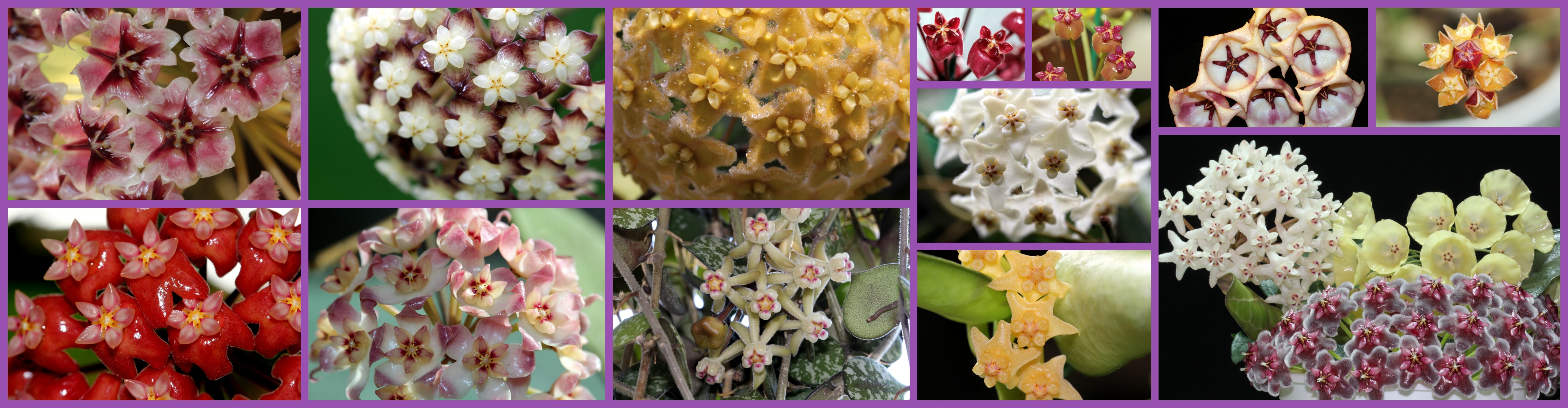

Hoya narcissiflora was firstly seen for sale as an unidentified species at the Flora Show in Jakarta Indonesia in October of 2014. After the plant bloomed, flower photos were uploaded to Facebook where it was realized to be a new species. The original collector that posted photos to Facebook provided a live specimen to S. Rahayu, and M. Rodda. They published the new species in Reinwardtia in 2017. The plant was discovered in a solitary location in a lowland primary forest at 100-300 meters in elevation near Sanggau, West Kalimantan. It was growing epiphytically on a tree in deep shade with humidity above 80%. It was named after the plant genus of Narcissus, which includes daffodils, because of the similarities in the shape and look of the flowers.
I first attempted to grow Hoya narcissiflora back around 2018, or 2019 with very bad results. I could barely keep it alive, restarting it a couple of times and losing it within a year. Fast forward a few years to spring 2024, and my very good friend Julie Kennedy from the UK sent me a nicely rooted cutting as part of a Hoya exchange. In the years since I first tried to grow the plant I had switched from a peat-based potting mix to a much more open substrate consisting of primarily coir chips. This mix has made a huge difference in my ability to grow these more finnicky species. Although I have only been growing Hoya narcissiflora for a few months, it has proven to be totally unproblematic growing in coconut husk chips. It budded up in a few months living in a high humidity grow tent and the flowers opened over the course of 3 days.
t is time to say goodbye to Hoya narcissiflora for now, but I hope to have it around for a long time and bring it back with subsequent flowerings. This is a great Hoya for anyone that has had good luck growing and flowering campanulate species such as H. danumensis. I would rate its difficulty level at somewhere around 6 on a scale of one being dead easy to grow, and 10 being all but impossible.


