Finally about 14 months after it got its first peduncle, the first flower opened. The photo of that first open flower is below. Note that the bloom has not even had a chance to reflex yet.

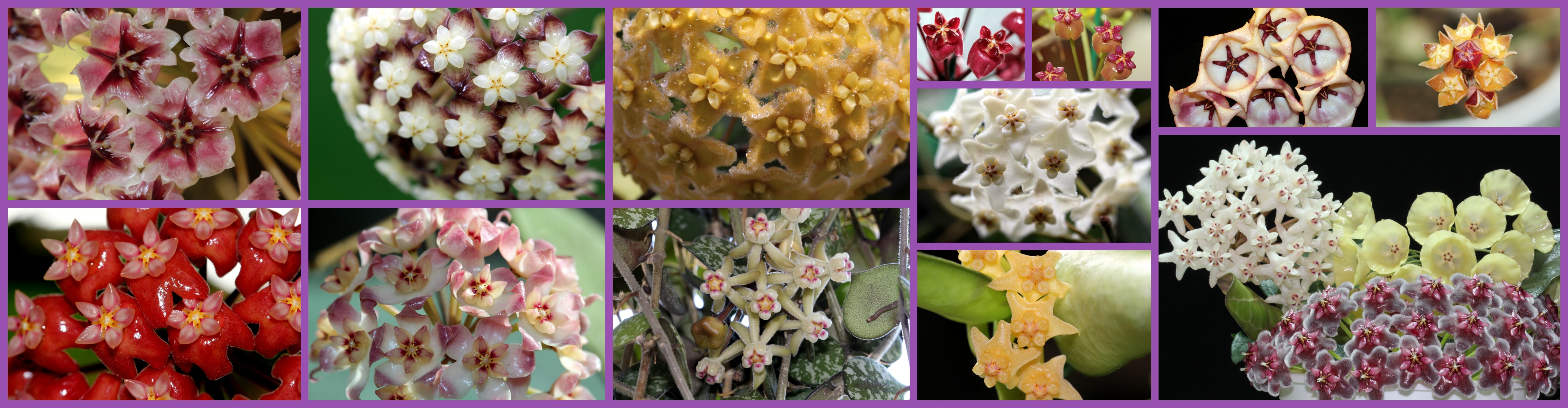
Finally about 14 months after it got its first peduncle, the first flower opened. The photo of that first open flower is below. Note that the bloom has not even had a chance to reflex yet.
I finally decided that Hoya piestolepsis had to be one of those few Hoyas that simply will not flower under constant day length. It had been under continuous 14 hour days since I had it so it was time to do something differently. I moved it to another tent where the lights were on for 12 hours each day. It stayed there for around 10 weeks and nothing changed so I new that decreasing the day length was not the answer. I moved it back to 14 hour days, and presto almost immediately the plant started to bud up, not just on one peduncle, but on at least 15 peduncles.

As the months rolled by, my first peduncle was followed by many more, but there was never a hint that any of these would ever bud up. It wanted to flower, but something was holding it back. Tomorrow I will reveal the secret to flowering this plant under grow lights.

This Hoya grew well right out of the gate, and presented no problems at all. I used coconut husk chips for a substrate and the plant went through several up-potting’s, and finally ended up in a 7 inch orchid pot. I noticed that it used a fair amount of water. I was so excited when I got my first peduncle, but this plant was not to be an early bloomer.

I received Hoya piestolepsis In a fantastic Indonesian import order in 2022 that was part of the order that brought me H. stenaokei, and IM-08 among others. The plant had leaves that led me to believe that it was going to be difficult. The leaves resembled those of H. inflata and H. megalaster, but it was so much easier to grow than those prima donnas.

Piesto may refer to flower parts (pisto), lepis means scale. Schlecter’s description says “Scales of the corona outspread, sides very compressed.” (A big thank you and shout out to Mary Carroll for providing this information).

Schlechter discovered it in trees in the woods on Gomadjidji in the Waria Valley at an altitude of 450 m above sea level. Waria Valley, Gomadjidji Mts., New Guinea. It had few branches and was very high climbing.

Friedrich Richard Rudolf Schlechter discovered Hoya piestolepsis on May 8th, 1909. Rudolf Schlechter operated during the golden age of botanical exploration and discovery. He is estimated to have proposed at least one thousand new species in Orchidaceae alone.

Here is a teaser photo, and we will begin our discussion of this wonderful Hoya tomorrow.

I have not flowered a Hoya onychoides for a very long time so it is nice to see these few buds pop up.
