I was fortunate enough to have both of these flowering at the same time.

I was fortunate enough to have both of these flowering at the same time.
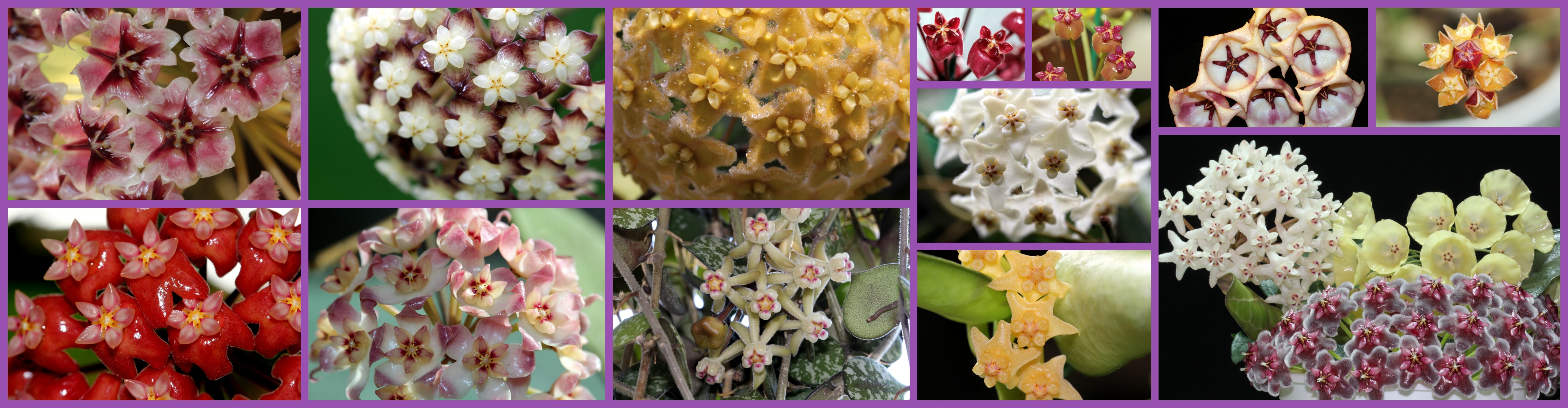
Since I don’t have much else going on I will present another long set of Hoya flower comparison photos. We start with Hoya chloroleuca and H. sp. Frog Foot.

Here is a photo showing what Hoya chloroleuca looks like after growing it from a one node rooted plant to what it looks like now after only four months.

Having seen so many close-up photos of the blooms of Hoya chloroleuca, I had no idea of the actual size of the flowers. They are actually quite small, coming in a little smaller than the size of a dime.

All I could do was to wait until it flowered to find out if what I purchased was really Hoya chloroleuca. Fortunately I did not have long to wait. I got my first peduncle at the end of June, which did not bud up, but it grew another peduncle in July, and budded up with only four buds, but that was enough; it flowered near the end of August only four months after receiving it. The plant was clearly labeled correctly, and I got my green coronas!

The plant grew well right out of the gate requiring a couple of up-pottings before it settled into a five inch clear orchid pot, inside of a terracotta cache pot. I had one fear with this plant from the beginning: that it might not be Hoya chloroleuca. The vendor told me that he had two different specimens of it growing in two separate locations, but had been unable to bring it to flower. This contrasted with what I had heard about it being an easy bloomer. Also, the leaves mimic so many other Hoya species that I was not sure that I really had what I wanted. I had also been disappointed many times before with bad plant Ids. Below the foliage of Hoya chloroleuca:


For the heck of it, I checked Etsy looking for the plant, and to my shock one popped up for sale. It was small, with only two leaves, but it looked healthy enough, I took a chance and purchased it on April 18th of this year, it arrived a week later in very nice shape. I could believe that I got lucky enough to find one for around $70 shipped! It came growing in a Pon-like mix, which I quickly transplanted over to my preferred coir chip substrate.

Those of you that know me realize that I don’t have much of a presence on Facebook. I only check it out about once a week, or so to get an idea of what is going on in the Hoya world. On one of those check in’s, March of 2025, I saw that my friend Julie Kennedy from the UK posted a flower photo of Hoya chloroleuca, which I had been unaware of. After I saw the green coronas, I knew that I had to somehow get my hands on this plant.

Hoya chloroleuca gets its name from chloro meaning green, and leuca meaning white probably referring to the white corolla and green corona.

According to Bolang Plant Nursery in Indonesia, this plant was lost for over one hundred years after Schlechter first collected it. It was found again in 2012, but the plant failed to adapt to cultivation and was lost again until 2023. It is now in the trade, but may very well be lost in its native habitat.
