Here is a photo of the leaf from Hoya clemensiorum seven days after the last photo. It has now moved from 4.5 inches to 6 inches. So the rate of growth has slowed down somewhat but it has now put on almost 6 inches of growth in about a month.

Here is a photo of the leaf from Hoya clemensiorum seven days after the last photo. It has now moved from 4.5 inches to 6 inches. So the rate of growth has slowed down somewhat but it has now put on almost 6 inches of growth in about a month.
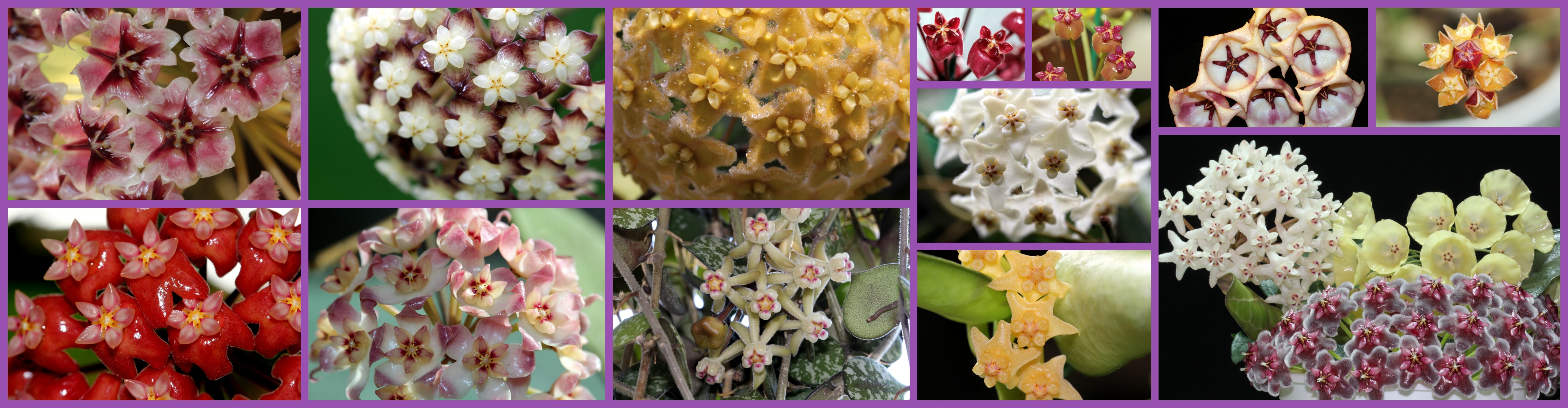
Here we have Hoya lyi with Hoya patella inserted into Hoya bicolor. It is interesting that the Hoya patella blossom is almost as big as the entire peduncle of flowers of both of the other Hoyas.

Here is the second flowering of Hoya lyi as seen with Hoya bicolor.

There is little to say about this photo as the picture says it all!

Hoya bicolor is a great Hoya for the beginning Hoya collector as it is very easy to grow, and it flowers in a short time from a cutting. There is a lot to be said for Hoyas such as these. If you already own Hoya incrassata, there is absolutely no reason to seek this one out however as they are virtually identical plants.


Except for a little difference in leaf thickness and shape, I can really tell very little difference between Hoya bicolor and Hoya incrassata. The flowers to my non-trained eyes are the same. This may be another case of Dale Kloppenburg being a little overly enthusiastic about breaking out a new species. Below comparison photos of The two plants:


Hoya bicolor was published by Dale Kloppenburg in 2002 and is endemic to the Philippines.

The flowers soon followed and they were typical of all the Finlaysonii type flowers that I have seen dozens of times before. The flowers were strongly scented of lemon.

It was not long before peduncles began to form in several areas of the plant, but the first few sets of buds blasted. I new however that since it was such a vigorous plant that it was only a matter of time until it would keep its buds and bloom. Finally all of the peduncles began to produce buds that did not blast in March of this year (2022).

I received Hoya bicolor from a very nice woman named Hannah from Hawaii mid-summer last year (2021). It was a rooted cutting in potting soil when I received it so I kept it that way. It put on exceptional growth and needed to be up-potted several times over the next few months. Below the foliage of Hoya bicolor.
